
AI
This week, a startup called Frore Systems announced $143 million in new funding, joining the unicorn club at a $1.64 billion valuation. In today's AI landscape, that number alone isn't surprising. What is surprising is what they actually make.
Frore doesn't build AI chips. They cool them.
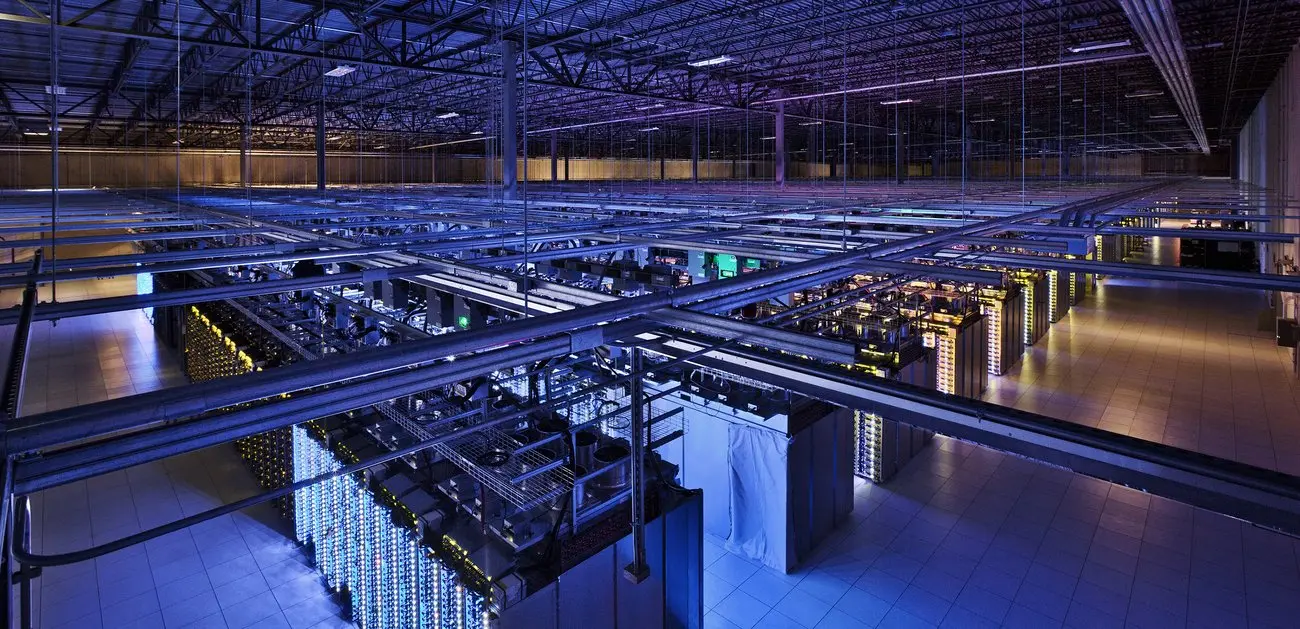
A company is now worth over a billion dollars because AI chips run too hot. Before that sounds absurd, it's worth understanding what's actually happening inside the data centers powering every AI tool you use today.
Every chip that does work generates heat. That's not new, it's been true since the first computers existed. What's changed is the scale.
Modern AI GPUs like Nvidia's can generate over 700 watts of heat per unit. For context, a household iron runs at around 1,000 watts. Now imagine hundreds of thousands of those running continuously inside a single building, packed tightly into server racks, never switching off.
When chips overheat, performance drops. The system throttles, automatically slowing itself down to avoid damage. That means all the money spent on expensive chips isn't producing the output it should, purely because of temperature.
According to Frore's CEO, cooling has become the single greatest limiter of AI performance. And investors, apparently, agree.From Phone Coolers to Data Center Unicorn
Frore was founded by two former Qualcomm engineers, and the company's technology was initially created to offer air-cooling for phones and other small fanless electronics. Not exactly a glamorous origin story.
The turning point came from an unexpected place. About two years ago, Nvidia CEO Jensen Huang received a demo of the technology and suggested they expand into liquid cooling for AI chips. Frore listened, pivoted, and their products now work alongside chips from Nvidia, Qualcomm, and AMD.
The interesting part isn't just the pivot story. It's what makes their approach different from conventional cooling.
Traditional data center cooling has hit its limits. Bigger fans need more power. Standard cold plates aren't efficient enough for increasingly dense, increasingly hot chips. And large water-based cooling systems eat up space and infrastructure.
Unlike traditional liquid cooling systems that use flat cold plates, Frore designs three-dimensional coolant channels customized for each chip type, improving cooling performance and allowing the liquid coolant to cycle through the system multiple times.
Their flagship product, LiquidJet Nexus, integrates multiple cooling units into a single lightweight system built for next-generation compute trays. Frore says the design can double compute density per rack and support warmer inlet temperatures, removing the need for mechanical chillers in some deployments.
Put simply: more GPUs fit in one rack, running cooler, at lower power consumption. For data center operators calculating cost per AI token generated, those numbers matter a lot.
What matters more than Frore's funding round is what it says about the broader state of the AI industry.
The AI race has shifted from "who has the most capable model" to "who can run that model efficiently at scale." And that's where physical problems like heat, power, and cooling suddenly become just as important as software.
Cooling is no longer a side issue. It is becoming core infrastructure. That matters because the AI arms race is pushing more value into the picks-and-shovels layer. Investors are now backing the hardware stack around AI, not just the applications built on top of it.
This is a pattern that repeats throughout tech history. When one layer of infrastructure comes under pressure, the layer beneath it that was previously considered "solved" is forced to evolve. Networks went through this. Storage went through this. Now it's thermal management's turn.
There's an interesting irony here. The AI industry keeps emphasizing efficiency: smaller models with the same performance, faster inference at lower cost. But on the other side, power consumption and cooling infrastructure requirements keep climbing.
The data center cooling market spans $31.39 billion in 2026 and is projected to reach $128.31 billion by 2033 at a 22.3% annual growth rate. That's not one startup's growth story. That's a signal that the entire industry is rebuilding its physical foundation.
Frore isn't the only player here. But their unicorn status, built entirely on the premise of "we cool chips better," points to something important: behind all the AI progress that looks glamorous on the surface, there are deeply unglamorous engineering problems that still haven't been solved.
Frore's story is a reminder that innovation doesn't always come from the most obvious direction. All the attention goes to chips, models, and AI applications. But the company now valued at $1.64 billion is solving a problem that sounds almost boring: heat.
Behind every AI model answering your questions, thousands of GPUs are working hard. And behind those GPUs, there are systems making sure they don't burn out. Those systems are now the subject of billions of dollars in investment.
Sometimes the most fundamental problems are the most expensive ones to solve.